

Inside the Booth: Understanding Simultaneous Interpretation
Imagine sitting in a conference hall in Tokyo. A speaker takes the stage and begins delivering a keynote in Japanese. You place a small receiver over your ears, and instantly, you hear their words in clear, fluent English. There is no pause. No waiting. The speaker continues uninterrupted, and you understand everything in real-time.
This is the magic of simultaneous interpretation. But behind that seemingly effortless experience lies one of the most complex cognitive and technical operations in the professional world.
At Columbus Lang, we connect clients with expert conference interpreters every day. Before we match you with the right professional for your event, we answer the same questions repeatedly. Let’s address them now to demystify this fascinating discipline.
Question 1: What is simultaneous interpretation?
Simultaneous interpretation is a mode of interpretation where the interpreter renders the speaker’s words into the target language in real-time, with only a slight delay of a few seconds, while the speaker continues speaking without pausing.
The interpreter listens through headphones, processes the message instantly, and speaks the interpretation into a microphone. The audience hears the translated version through their own headsets. To the listener, it feels as though the speaker is addressing them directly in their own language.
This is the method used at the United Nations, the European Union, major international conferences, and global corporate events. It is the gold standard for multilingual communication at scale.
Question 2: How is it different from consecutive interpretation?
This is the most common point of confusion, so let’s make the distinction crystal clear.
Feature | Simultaneous Interpretation | Consecutive Interpretation |
Timing | Interpreter speaks at the same time as the speaker (with slight delay) | Interpreter speaks after the speaker pauses |
Flow | Speaker never stops; interpretation happens in real-time | Speaker stops every 1-5 minutes to allow interpretation |
Equipment | Requires booth, headphones, microphones | Requires only notepad and pen (or memory) |
Time Impact | Does not extend the duration of the event | Doubles the time needed (speaker speaks, interpreter speaks) |
Setting | Large conferences, UN meetings, virtual events | Small meetings, depositions, interviews, ceremonies |
Cognitive Load | Extreme; requires simultaneous listening and speaking | High but allows for brief mental breaks during pauses |
The simple rule: If the speaker never stops and the audience hears interpretation through headsets, it’s simultaneous. If the speaker speaks, then stops, then the interpreter speaks, then the speaker resumes, it’s consecutive.
Question 3: Do interpreters really listen and speak at the same time?
Yes. And this is precisely what makes simultaneous interpretation so remarkable, and so exhausting.
The interpreter must perform three cognitive tasks simultaneously:
- Listen actively to the incoming message in the source language
- Analyze and reformulate that message into the target language
- Speak clearly while continuing to listen to the next sentence
This is often described as “dual-tasking” or “split attention.” The interpreter’s brain is effectively divided, with one channel receiving input and another producing output simultaneously. It is a skill that takes years of training and thousands of hours of practice to master.
To make it even more challenging, the interpreter must also monitor their own output for accuracy while suppressing the natural instinct to simply repeat words verbatim. They must convey meaning, tone, and intent—not just vocabulary.
Question 4: What equipment is needed for simultaneous interpretation?
Unlike consecutive interpretation, which requires only a human with a notepad, simultaneous interpretation depends on a carefully designed technology ecosystem.
The essential components include:
- The Booth: A soundproof or sound-dampened enclosure that isolates the interpreter from ambient noise. Permanent booths follow ISO 2603 standards; mobile booths follow ISO 4043.
- The Interpreter Console: A control panel that allows the interpreter to adjust incoming volume, select channels, and control their microphone.
- Headsets: High-quality headphones that deliver the speaker’s voice directly to the interpreter while blocking out external sound.
- Microphones: Both for the interpreter (to send output to the audience) and for the speaker (to send input to the interpreter).
- Audience Receivers: Headsets or earpieces that allow listeners to select their preferred language channel.
- Transmission System: Wired or wireless technology that carries the interpretation from the booth to the audience.
According to the International Organization for Standardization (ISO), several key standards govern this equipment, including ISO 20109 for simultaneous interpreting equipment requirements, ISO 22259 for conference systems, and ISO 24019 for simultaneous interpreting delivery platforms. These standards, developed in cooperation with AIIC, ensure that the technology supports, rather than hinders, the interpreter’s demanding work. (Source)
For virtual events, this equipment is replaced by software platforms designed for Remote Simultaneous Interpretation (RSI), which we’ll explore later in this guide.
Question 5: How much does simultaneous interpretation cost?
The short answer: It depends on several factors. But it’s important to understand that you are not paying for “an interpreter.” You are paying for a team, equipment, and extensive preparation.
Cost factors include:
- Language pair: Rare language combinations command higher rates
- Number of languages: Each additional language requires a separate team
- Event duration: Half-day, full-day, or multi-day rates apply
- Equipment rental: Booths, consoles, headsets, and technicians
- Travel: If the event is in-person and interpreters must travel
- Preparation time: Interpreters often require briefing materials, glossaries, and pre-event calls
Industry standard: Simultaneous interpretation is typically priced in half-day or full-day increments per interpreter, with a minimum of two interpreters per language (due to the 20-30 minute rotation rule).
At Columbus Lang, we provide transparent, customized quotes based on your specific event requirements. No hidden fees, no surprises.
Question 6: When do I need simultaneous vs. consecutive interpretation?
This decision usually comes down to three factors: audience size, time available, and formality.
Choose simultaneous interpretation when:
- You have a large audience (50+ people)
- Multiple languages are being spoken
- Time is limited and you cannot double the event duration
- The setting is formal (conference, summit, parliamentary proceeding)
- Attendees need to hear everything in real-time
Choose consecutive interpretation when:
- You have a small group (under 20 people)
- The setting is intimate (business meeting, deposition, interview)
- You want to allow for questions and back-and-forth dialogue
- Budget is more constrained (no equipment costs)
- You don’t mind the event taking twice as long
Still unsure? Columbus Lang offers complimentary consultations to help you assess your needs and choose the right modality. Contact us now!
How Simultaneous Interpretation Actually Works
Now that we’ve established the basics, let’s pull back the curtain on what actually happens inside the booth—and inside the interpreter’s mind. The process that seems effortless to the audience is actually a carefully orchestrated sequence of cognitive and technical steps, all happening in split seconds.
The Interpreter’s Brain: A Cognitive Marvel
To understand simultaneous interpretation, you must first understand the mental gymnastics required. It is not simply “hearing words and saying them in another language.” If it were, machine translation would have replaced humans years ago.
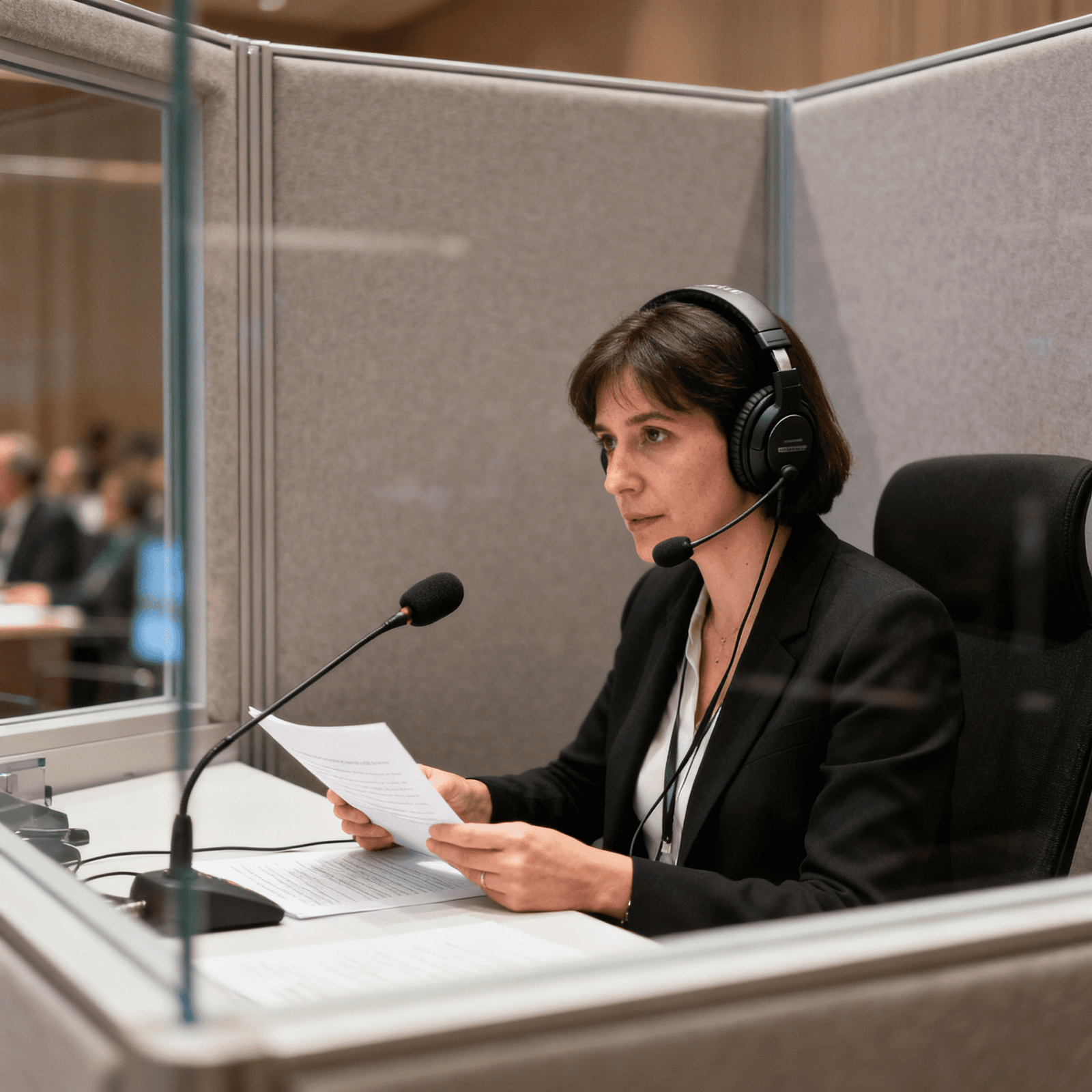
The interpreter's brain performs five distinct tasks simultaneously:
- Listening and Analysis: The interpreter hears the source language through headphones, filtering out background noise and focusing on the speaker’s words, tone, and intent.
- Comprehension and Reformulation: The brain instantly decodes the meaning—not just the words—and reconstructs that meaning in the target language. This requires deep cultural and contextual understanding.
- Short-Term Memory Management: The interpreter holds the previous phrase in memory while processing the current one and anticipating the next. This is why numbers, names, and lists are particularly challenging.
- Output Production: The interpreter speaks clearly and confidently into the microphone, matching the speaker’s tone, emotion, and pace as closely as possible.
- Self-Monitoring: While speaking, the interpreter listens to their own output to catch errors, correct slips, and ensure accuracy—all while continuing to listen to the next incoming sentence.
The décalage (or lag time): Interpreters maintain a deliberate delay of 2-3 seconds behind the speaker. This buffer allows them to hear a complete thought before rendering it, ensuring they capture meaning rather than just words. A skilled interpreter adjusts this lag constantly—shorter for simple statements, longer for complex ideas or tricky syntax.
The 20-Minute Rule: Why Interpreters Work in Teams
Here is something most people don’t realize: No single interpreter can handle an entire event alone.
The cognitive load of simultaneous interpretation is so intense that accuracy begins to decline measurably after 20-30 minutes. This is not a matter of skill or experience—it is basic human neurology. The brain simply cannot sustain that level of divided attention indefinitely.
The industry standard (AIIC):
- Interpreters work in teams of two per language
- They rotate every 20-30 minutes
- The “resting” interpreter remains in the booth, monitoring, providing support, and preparing to take over
This is why hiring “one interpreter” for a full-day conference is a red flag. Professional simultaneous interpretation is a team sport.
The Equipment Ecosystem
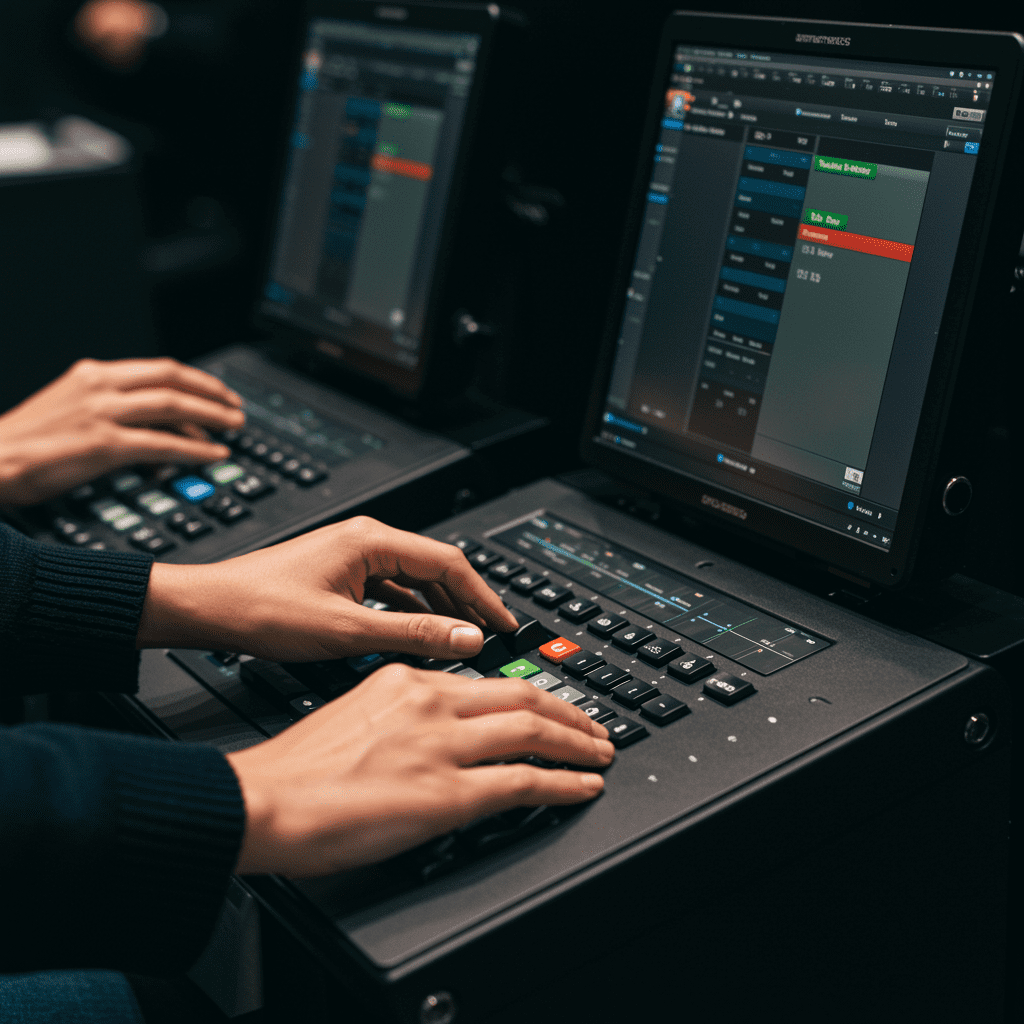
Simultaneous interpretation is impossible without technology. The equipment serves one purpose: to create a clean, uninterrupted channel between speaker, interpreter, and listener.
The Booth:
- Soundproof or sound-dampened to isolate interpreters from ambient noise
- Provides visual line of sight to the speaker and presentation screens
- Permanent booths follow ISO 2603; mobile booths follow ISO 4043
The Console:
- Allows interpreter to control incoming volume from multiple channels
- Includes microphone controls and emergency mute functions
- Often has a “relay” switch for situations requiring interpretation through a pivot language
Headsets and Microphones:
- Closed-back headphones prevent sound leakage into the microphone
- Noise-canceling microphones ensure only the interpreter’s voice is transmitted
Audience Receivers:
- Handheld devices or earpieces with channel selectors
- Allow listeners to choose their preferred language
Transmission System:
- Wired or wireless technology carrying audio from booth to audience
- Can be infrared, FM radio, or IP-based (for virtual events)
The Two Modes: Booth vs. Portable
Not all simultaneous interpretation happens in a glass booth. The equipment scales to the setting.
Conference Mode (Full Setup):
– Soundproof booths
– Multiple language channels
– Professional audio technicians
– Used for large conferences, UN-style meetings, summits
Portable Mode (Whisper or Bidule):
– No booth; interpreter uses portable transmitter and lightweight headset
– Interpreter whispers into microphone while sitting near the audience
– Audience uses small earpieces
– Used for site tours, small group meetings, guided visits
Remote Simultaneous Interpretation (RSI):
– Interpreters work from home or studio
– Specialized platforms (KUDO, Interprefy, Zoom with interpretation)
– Audience joins via computer or app
– Exploded during pandemic; now standard for virtual and hybrid events
The Relay System: When No Direct Interpreter Exists
What happens when a speaker uses a language for which no direct interpreter is available in the target language? Enter relay interpretation.
How relay works:
- Speaker speaks Language A
- Interpreter 1 renders Language A into Language B (the pivot language)
- Interpreter 2 listens to Language B and renders it into Language C
For example: A speaker uses Finnish. No Finnish-to-Japanese interpreter exists. A Finnish-to-English interpreter works, and English-to-Japanese interpreters listen to that feed to serve the Japanese-speaking audience.
The challenge: Each relay adds a layer of potential distortion. Professional interpreters prepare extensively to minimize this risk.
What Simultaneous Interpretation Sounds Like to the Audience
To the listener wearing headphones, the experience is seamless. They hear:
- A calm, clear voice
- The speaker’s tone and emotion preserved
- No overlap or echo (if equipment is properly configured)
- Cultural adaptations (idioms explained, jokes adjusted)
What they do not hear:
- The interpreter’s mental effort
- The original speaker’s voice (unless they switch channels)
- Hesitations, stumbles, or self-corrections (professionals hide these seamlessly)
A good simultaneous interpretation is invisible. If the audience notices the interpreter, something has gone wrong. At Columbus Lang, we strictly follow the two-interpreter rotation standard to ensure sustained accuracy and performance.
Where Simultaneous Interpretation Is Used
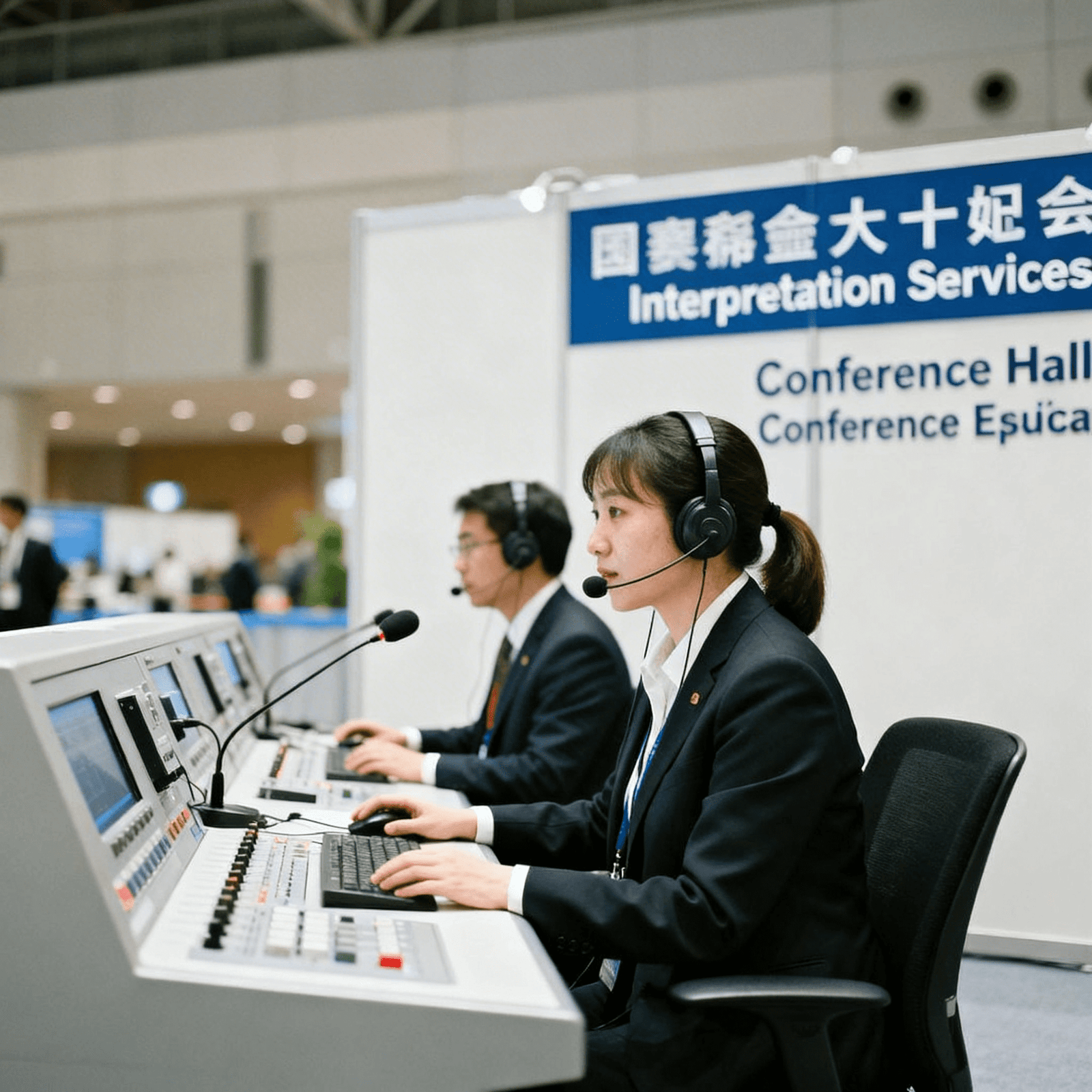
Simultaneous interpretation is not a one-size-fits-all service. It adapts to the setting, the audience size, and the stakes involved. From the halls of international diplomacy to the intimacy of a hospital room, this mode of interpretation enables communication that would otherwise be impossible.
Let’s explore the most common environments where simultaneous interpretation comes to life.
International Diplomacy and Government
This is the birthplace of simultaneous interpretation. After World War II, the Nuremberg Trials pioneered the use of simultaneous interpretation to conduct proceedings in four languages simultaneously. Today, it is the standard for global governance.
The United Nations:
- Six official languages: Arabic, Chinese, English, French, Russian, Spanish
- Interpreters work in soundproof booths overlooking the General Assembly
- Every speech is interpreted into all six languages in real-time
- Interpretation is considered a matter of diplomatic equality—no language is privileged over others
The European Union:
- 24 official languages
- One of the largest employers of conference interpreters in the world
- Parliament sessions feature interpretation into all languages
- Citizens have the right to address EU institutions in their native language
Government Summits and State Visits:
- Bilateral meetings between heads of state
- Press conferences following diplomatic negotiations
- Treaty signings and ceremonial events
Why simultaneous here: When world leaders speak, every word matters. There is no time to pause for consecutive interpretation, and the stakes are too high for errors.
Large-Scale Conferences and Events
This is the most familiar setting for simultaneous interpretation. Any time professionals gather from multiple countries to share ideas, simultaneous interpretation makes it possible.
Industry Conferences:
- Medical conferences where researchers present findings to international colleagues
- Technology summits where product launches reach global audiences
- Academic symposia where scholars debate across language barriers
Corporate Events:
- Multinational company town halls
- Shareholder meetings with investors from multiple countries
- Sales kickoffs with teams spanning the globe
- Product training sessions for international distributors
Association Meetings:
- Non-governmental organizations (NGOs) coordinating global initiatives
- Professional associations holding world congresses
- Religious or cultural gatherings with diverse attendees
Why simultaneous here: These events are tightly scheduled. Speakers have allotted time slots. Consecutive interpretation would double the length of every presentation, making multi-day events impossible.
Legal and Judicial Settings
While courts often use consecutive interpretation for witness testimony, simultaneous interpretation appears in specific legal contexts where real-time understanding is essential.
International Courts:
- International Court of Justice (The Hague)
- International Criminal Court
- War crimes tribunals
Depositions and Arbitrations:
- Multinational commercial arbitrations
- Cross-border depositions where lawyers need to hear testimony in real-time
- Witness preparation with international legal teams
Asylum Hearings and Immigration Proceedings:
- Some jurisdictions use simultaneous interpretation to expedite proceedings
- Applicants can hear the proceedings in their language while testifying in another language
Why simultaneous here: In international justice, defendants and judges must understand proceedings as they happen. Justice delayed is justice denied.
Medical and Healthcare
Healthcare interpretation is traditionally consecutive due to the sensitive nature of patient-provider communication. However, simultaneous interpretation appears in specific medical contexts.
Medical Conferences and Training:
- International medical symposia
- Surgical demonstrations broadcast to global audiences
- Medical training for international healthcare workers
Telemedicine (Remote):
- Some telemedicine platforms now offer simultaneous interpretation channels
- Patients can hear the doctor in their language while the doctor speaks
- Particularly useful in emergencies where pausing is not ideal
Clinical Trials:
- Multinational drug trials require consistent messaging across sites
- Patient-informed consent may be delivered simultaneously in multiple languages
Why simultaneous here: In clinical trials, standardization matters. Every patient must receive exactly the same information at exactly the same time.
Business and Corporate Settings
Beyond large conferences, simultaneous interpretation appears in everyday business contexts where companies operate across borders.
Board Meetings:
- Multinational boards with directors from different countries
- Every director must hear discussions in real-time to participate equally
Negotiations:
- High-stakes contract negotiations
- Merger and acquisition discussions
- Joint venture planning
Factory Tours and Site Visits:
- Portable whisper interpretation (bidule) allows investors or clients to tour facilities while hearing a real-time explanation
- No stopping the tour; no awkward pauses
Why simultaneous here: In business, time is money. Pausing for interpretation slows deals and disrupts momentum.
Live Television and Media
Simultaneous interpretation has become a familiar feature of global media coverage.
News Broadcasts:
- Live press conferences from foreign leaders
- International election coverage
- Breaking news from non-English speaking countries
Award Shows and Entertainment:
- Red carpet interviews with international celebrities
- Award acceptance speeches at global events
- Live commentary for international film festivals
Sports Events:
- Post-match interviews with foreign athletes
- International press conferences at the Olympics or World Cup
- Live commentary in multiple languages for broadcasters
Why simultaneous here: News happens in real-time. Audiences cannot wait for a recorded translation; they need to understand as events unfold.
Virtual and Hybrid Events (RSI)
The COVID-19 pandemic accelerated a transformation that was already underway: the shift to Remote Simultaneous Interpretation (RSI).
How RSI Works:
- Interpreters work from home studios or professional hubs
- Specialized platforms (KUDO, Interprefy, Interactio, Zoom with interpretation) host the event
- Attendees join from anywhere in the world
- Interpretation channels are built into the platform interface
Where RSI Is Used:
- Fully virtual conferences and summits
- Hybrid events with both in-person and remote attendees
- Internal company meetings with global teams
- Webinars and product launches
Benefits of RSI:
- No travel costs for interpreters
- Access to global talent pool (not limited to local interpreters)
- Faster setup and teardown
- Built-in audience analytics
Challenges of RSI:
- Internet stability requirements
- Interpreters cannot see the room or read non-verbal cues as easily
- Sound quality depends on the attendees’ equipment
- Fatigue from “screen-based” interpreting
Why simultaneous here: Virtual events erased borders. Simultaneous interpretation adapted to follow.
Religious and Ceremonial Settings
Simultaneous interpretation has even found its place in spiritual and ceremonial contexts.
International Religious Gatherings:
- Papal masses and addresses (interpreted into dozens of languages)
- Global interfaith dialogues
- Large-scale pilgrimages with international participants
Weddings and Ceremonies:
- Multicultural weddings where guests speak different languages
- Ceremonies conducted in one language with interpretation for the other family
Why simultaneous here: In spiritual settings, the moment matters. You cannot pause a prayer or ceremony for translation. The experience must be shared in real-time.
The Columbus Lang Perspective: Making Sense of Simultaneous Interpretation
After years of connecting clients with conference interpreters across industries, we’ve developed a unique way of thinking about simultaneous interpretation. It’s not just a service we broker—it’s a profession we deeply respect and strive to demystify.
Here is how we frame it at Columbus Lang.
The Columbus Lang Analogy: Flying the Plane While Building It
We often tell clients that simultaneous interpretation is like flying a plane while building it.
Think about it:
The interpreter is the pilot. They must navigate the conversation, maintain a steady pace, and keep everything under control. But unlike a pilot who flies a pre-built aircraft, the interpreter is also the builder—constructing sentences in real-time, choosing the right words, and adapting to unexpected turbulence (like a sudden change in topic or a speaker with a heavy accent).
And here’s the kicker: They do all of this while the plane is already in the air, with hundreds of passengers relying on them to land safely.
This analogy helps clients understand why:
- Preparation matters: A pilot files a flight plan. An interpreter studies briefing materials, glossaries, and speaker notes.
- Teamwork is essential: Long-haul flights have multiple pilots. Long events have multiple interpreters, rotating every 20-30 minutes.
- Fatigue is real: You wouldn’t want a pilot flying for 12 hours straight. You shouldn’t want an interpreter working without a partner.
The Columbus Lang Definition of Quality
In simultaneous interpretation, quality is invisible. When it’s done right, the audience forgets the interpreter exists. They laugh at the jokes, nod at the insights, and take notes on the content—all in their native language.
At Columbus Lang, we define quality interpretation by three standards:
1. Fidelity Without Distortion
The interpreter preserves the speaker’s message completely—not just the words, but the tone, the intent, and the emotional weight. If the speaker is passionate, the audience feels passion. If the speaker is cautious, the audience hears caution. Nothing is added. Nothing is lost.
2. Seamless Delivery
The interpretation flows naturally, with no awkward pauses, verbal stumbles, or self-corrections. The interpreter’s voice is calm and confident, even when the speaker is not. The audience never hears the interpreter struggling.
3. Cultural Bridging
The interpreter doesn’t just translate words; they translate meaning. Idioms become equivalent expressions. Cultural references are explained or adapted. Jokes land in the target language even if the humor doesn’t translate directly.
Why Columbus Lang?
You now understand what simultaneous interpretation is, how it works, and where it’s used. But understanding the service and finding the right provider are two different things.
Here is why clients trust Columbus Lang for simultaneous interpretation:
We Vet for the Team Dynamic
We don’t just send one interpreter and hope for the best. We ensure every booking includes a team of at least two interpreters per language, following the 20-minute rotation standard. No solo interpreters running marathons alone.
We Match Expertise to Industry
A medical conference requires interpreters who understand anatomy. A shareholder meeting requires interpreters who know financial terminology. We don’t just match languages; we match subject-matter expertise.
We Support the Technology
Whether you need a full booth setup with soundproof equipment or a portable system for a site tour, we help you source the right technology—or connect you with technicians who handle it for you.
We Prepare Thoroughly
Before every event, we facilitate briefing calls, share glossaries, and provide speaker notes to our interpreters. Preparation is not optional; it is baked into our process.
We Offer Transparent Pricing
No hidden fees. No surprise charges. We provide clear quotes based on language pairs, event duration, and equipment needs. What we quote is what you pay.
Ready to Make Your Next Event Multilingual?
Simultaneous interpretation opens doors. It allows you to speak to the world without leaving your language behind. Whether you’re planning a global conference, a multinational board meeting, or a virtual summit, the right interpretation team makes all the difference.
Planning a conference with international attendees? We’ll match you with certified conference interpreters who understand your industry and your audience.
Hosting a virtual event with remote participants? We’ll connect you with RSI-trained interpreters who know the platforms and the protocols.
Need equipment, technicians, or onsite support? We’ll coordinate the logistics so you can focus on your content.
Request a tailored interpretation plan from Columbus Lang today!